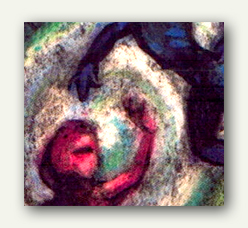
Timens Decedende. Timens Manendi.

(Scared to Leave. Scared to Stay.)

from Rhapsody of the Soul

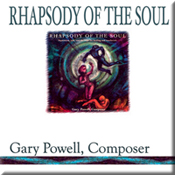
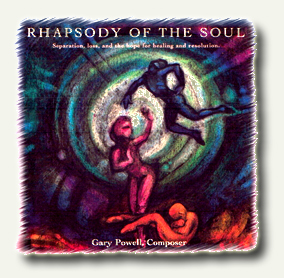
Rhapsody of the Soul Artby Gary Powell

All is fine. Then, it’s not. A little brother or sister is born and that mucks up the good thing you had going as the only child. You were on your way to becoming the prom queen in high school and then the exotic beauty from Sweden moves to town. You had the perfect job with open communications, fairness, and positive leadership, and then, your reasonable and fair-minded boss is replaced by a pinhead.

These imperfections of timing and circumstance, like being caught in the eye of hurricane that wasn’t forecasted, present us with a choice. The Clash asked the question best, “Should I Stay or Should I Go?” As we luxuriate in our success and safety, the uncertainties of living – which is mostly everything – delivers us a pizza with anchovies. Send it back and it will be another hour and a half before you eat. Pick off the anchovies and you can still taste them. Eat the anchovies and it begs the question, “Who actually eats these things?”

In her book, Necessary Losses, author Judith Viorst teaches us that we have seen this all before and have all experienced these critical and epiphanic moments at every stage of our development. As adults, however, when health, financial security and our commitments become threatened by the unsanitary flush of disorganization, real fear can invade our decision queue in a serious and possibly crippling way. We can become scared to leave and scared to stay in the same moment. Making distasteful decisions will always be a part of being an adult. Whether or not our choices are healthy for ourselves, our families, our friends and our associates is yet another issue. On rapprochement of an 18 month-old child… we are feeling: Help! On the other hand, we don’t want help. Or rather, we both want it and don’t want it. And, besieged by contradictions, we hold on tight and push away, we follow and flee. We insist on our allpowerfulness and rage – RAGE! – at our helplessness, and our separation anxiety intensifies. Craving that old sweet oneness, yet dreading engulfment, wishing to be our mother’s and yet be our own, we stormily swing from mood to mood, advancing and retreating – the quintessential model of two mindedness. – Judith Viorst, Necessary Losses


Enter Rhapsody of the Soul’s Timens Decedende. Timens Manendi. The piece begins musically in the safety of the feminine – the good mother. It is the calm before the storm. The low bass voice intrudes in this reflective place with a warning, “Timens decedende. Timens manendi.” Scared to leave. Scared to stay. The feminine is now joined by the masculine with one last shared pleading, “Suavis,” where both yearn for the sweet oneness that they know will soon be gone. Now, the musical anticipates the emotional where concern shifts to fear. It is within the very nature of this fear which now transforms us musically and figuratively to an all male maelstrom, powering us away from thoughtful contemplation and exploding toward action and resolution. The masculine allure to risk is a major evolutionary component to the success of the human race. But, risk can also go blind and action alone can fail to satisfy. The holy grail of resolution, when finally reached, leaves us alone, separated from each other, left only with our personal trauma to endure. When the masculine is excavating safety only from decisiveness, we can all be seductively drawn into this frenetic yet highly-organized battle cry. This piece ends with that battle cry: masculine’s ultimate weapon powered by our deepest genetic and psychological longing for conclusion – no matter the cost.

rhapsody of the soul gary powell composer

Now Available Online for Worldwide Download from These Stores

iTunes Worlwide button
amazon mp3 button


Rhapsody of the Soul

(Separation, Loss and the Hope for Healing and Resolution)

An original work for the Austin Contemporary Ballet
Choreographed by Greg Easley, Artistic Director
Composed and Produced by Gary Powell
Latin Translations by Barry Brandenburg

1. Suavis Unitas Ne Discedas (Sweet oneness depart Not.)
2. Veniri Necesse Mihi Pati (It must come. I must suffer.)
3. Prudens Viae Nihil Moveor (I know my path. I do not move.)
4. In Umbris Progreditur Et Novit Amicos (It moves in shadows and knows my friends.)
5. Timens Decedende. Timens Manendi (Scared to leave. Scared to stay.)
6. In Morte Perditus (Lost in death.)
7. Kyrie Eleison, Christe Eleison (Lord have mercy. Christ have mercy.)

Amy Atchley – Soprano
Chris Martin – Alto
James Fenner – Percussion
John White, Billy Henry,Gary Powell,
Joe York, Scotty Roberts – Male Chorus
Chris Martin – Alto
Illustrations: Antonio Muñoz

All Content of Gary Powell’s Site is Licensed Under a
Creative Commons Attribution-NonCommercial-NoDerivs 2.5 License

.

Rhapsody of the Soul Artby Gary Powell

All is fine. Then, it’s not. A little brother or sister is born and that mucks up the good thing you had going as the only child. You were on your way to becoming the prom queen in high school and then the exotic beauty from Sweden moves to town. You had the perfect job with open communications, fairness, and positive leadership, and then, your reasonable and fair-minded boss is replaced by a pinhead.

These imperfections of timing and circumstance, like being caught in the eye of hurricane that wasn’t forecasted, present us with a choice. The Clash asked the question best, “Should I Stay or Should I Go?” As we luxuriate in our success and safety, the uncertainties of living – which is mostly everything – delivers us a pizza with anchovies. Send it back and it will be another hour and a half before you eat. Pick off the anchovies and you can still taste them. Eat the anchovies and it begs the question, “Who actually eats these things?”

In her book, Necessary Losses, author Judith Viorst teaches us that we have seen this all before and have all experienced these critical and epiphanic moments at every stage of our development. As adults, however, when health, financial security and our commitments become threatened by the unsanitary flush of disorganization, real fear can invade our decision queue in a serious and possibly crippling way. We can become scared to leave and scared to stay in the same moment. Making distasteful decisions will always be a part of being an adult. Whether or not our choices are healthy for ourselves, our families, our friends and our associates is yet another issue. On rapprochement of an 18 month-old child… we are feeling: Help! On the other hand, we don’t want help. Or rather, we both want it and don’t want it. And, besieged by contradictions, we hold on tight and push away, we follow and flee. We insist on our allpowerfulness and rage – RAGE! – at our helplessness, and our separation anxiety intensifies. Craving that old sweet oneness, yet dreading engulfment, wishing to be our mother’s and yet be our own, we stormily swing from mood to mood, advancing and retreating – the quintessential model of two mindedness. – Judith Viorst, Necessary Losses


Enter Rhapsody of the Soul’s Timens Decedende. Timens Manendi. The piece begins musically in the safety of the feminine – the good mother. It is the calm before the storm. The low bass voice intrudes in this reflective place with a warning, “Timens decedende. Timens manendi.” Scared to leave. Scared to stay. The feminine is now joined by the masculine with one last shared pleading, “Suavis,” where both yearn for the sweet oneness that they know will soon be gone. Now, the musical anticipates the emotional where concern shifts to fear. It is within the very nature of this fear which now transforms us musically and figuratively to an all male maelstrom, powering us away from thoughtful contemplation and exploding toward action and resolution. The masculine allure to risk is a major evolutionary component to the success of the human race. But, risk can also go blind and action alone can fail to satisfy. The holy grail of resolution, when finally reached, leaves us alone, separated from each other, left only with our personal trauma to endure. When the masculine is excavating safety only from decisiveness, we can all be seductively drawn into this frenetic yet highly-organized battle cry. This piece ends with that battle cry: masculine’s ultimate weapon powered by our deepest genetic and psychological longing for conclusion – no matter the cost.


rhapsody of the soul gary powell composer

Now Available Online for Worldwide Download from These Stores

iTunes Worlwide button
amazon mp3 button


Rhapsody of the Soul

(Separation, Loss and the Hope for Healing and Resolution)

An original work for the Austin Contemporary Ballet
Choreographed by Greg Easley, Artistic Director
Composed and Produced by Gary Powell
Latin Translations by Barry Brandenburg

1. Suavis Unitas Ne Discedas (Sweet oneness depart Not.)
2. Veniri Necesse Mihi Pati (It must come. I must suffer.)
3. Prudens Viae Nihil Moveor (I know my path. I do not move.)
4. In Umbris Progreditur Et Novit Amicos (It moves in shadows and knows my friends.)
5. Timens Decedende. Timens Manendi (Scared to leave. Scared to stay.)
6. In Morte Perditus (Lost in death.)
7. Kyrie Eleison, Christe Eleison (Lord have mercy. Christ have mercy.)

Amy Atchley – Soprano
Chris Martin – Alto
James Fenner – Percussion
John White, Billy Henry,Gary Powell,
Joe York, Scotty Roberts – Male Chorus
Chris Martin – Alto
Illustrations: Antonio Muñoz

All Content of Gary Powell’s Site is Licensed Under a
Creative Commons Attribution-NonCommercial-NoDerivs 2.5 License

.
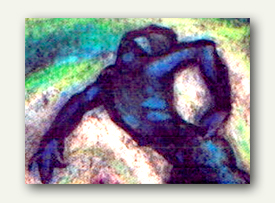
In Morte Perditus

(Lost in Death)

from Rhapsody of the Soul

by Gary Powell

Rhapsody of the Soul - Lost in DeathAt last, the dreaded inevitable happens. We hear the bell toll. The ghostly soprano voice representing ultimate loss beckons us, or, perhaps our loved ones. The ringing and predictable chords of life are lost to the repetitive ambiguity of two parallel major chords. In this, the tonality – the key – is uncertain. In spite of our obsessions and our avoidance and our denials, we will die. Doug Manning, The Gift of Significance

The chanting of bass voices implores us to experience our loss and this, our unchosen path. Other voices join as each separately restates our musical themes and recounts each step of our rhapsodic journey. It’s a cacophony of sounds, hardly discernible until the final gasp of life is taken and all voices join in unison in the lyric, “suavis unitas ne discedas” – sweet oneness depart not. The train’s whistle blows. The music is reduced to a single bass pedal, and life is over.


rhapsody of the soul gary powell composer

Now Available Online for Worldwide Download from These Stores

iTunes Worlwide button
amazon mp3 buttonrhapsody button


Rhapsody of the Soul

(Separation, Loss and the Hope for Healing and Resolution)

An original work for the Austin Contemporary Ballet
Choreographed by Greg Easley, Artistic Director
Composed and Produced by Gary Powell
Latin Translations by Barry Brandenburg

1. Suavis Unitas Ne Discedas (Sweet oneness depart Not.)
2. Veniri Necesse Mihi Pati (It must come. I must suffer.)
3. Prudens Viae Nihil Moveor (I know my path. I do not move.)
4. In Umbris Progreditur Et Novit Amicos (It moves in shadows and knows my friends.)
5. Timens Decedende. Timens Manendi (Scared to leave. Scared to stay.)
6. In Morte Perditus (Lost in death.)
7. Kyrie Eleison, Christe Eleison (Lord have mercy. Christ have mercy.)

Amy Atchley – Soprano
Chris Martin – Alto
John White, Billy Henry,Gary Powell, Chris Martin – Chant Chorus
Illustrations: Antonio Muñoz

All Content of Gary Powell’s Site is Licensed Under a
Creative Commons Attribution-NonCommercial-NoDerivs 2.5 License

.

by Gary Powell

Rhapsody of the Soul - Lost in DeathAt last, the dreaded inevitable happens. We hear the bell toll. The ghostly soprano voice representing ultimate loss beckons us, or, perhaps our loved ones. The ringing and predictable chords of life are lost to the repetitive ambiguity of two parallel major chords. In this, the tonality – the key – is uncertain. In spite of our obsessions and our avoidance and our denials, we will die. Doug Manning, The Gift of Significance
The chanting of bass voices implores us to experience our loss and this, our unchosen path. Other voices join as each separately restates our musical themes and recounts each step of our rhapsodic journey. It’s a cacophony of sounds, hardly discernible until the final gasp of life is taken and all voices join in unison in the lyric, “suavis unitas ne discedas” – sweet oneness depart not. The train’s whistle blows. The music is reduced to a single bass pedal, and life is over.


rhapsody of the soul gary powell composer

Now Available Online for Worldwide Download from These Stores

iTunes Worlwide button
amazon mp3 buttonrhapsody button


Rhapsody of the Soul

(Separation, Loss and the Hope for Healing and Resolution)

An original work for the Austin Contemporary Ballet
Choreographed by Greg Easley, Artistic Director
Composed and Produced by Gary Powell
Latin Translations by Barry Brandenburg

1. Suavis Unitas Ne Discedas (Sweet oneness depart Not.)
2. Veniri Necesse Mihi Pati (It must come. I must suffer.)
3. Prudens Viae Nihil Moveor (I know my path. I do not move.)
4. In Umbris Progreditur Et Novit Amicos (It moves in shadows and knows my friends.)
5. Timens Decedende. Timens Manendi (Scared to leave. Scared to stay.)
6. In Morte Perditus (Lost in death.)
7. Kyrie Eleison, Christe Eleison (Lord have mercy. Christ have mercy.)

Amy Atchley – Soprano
Chris Martin – Alto
John White, Billy Henry,Gary Powell, Chris Martin – Chant Chorus
Illustrations: Antonio Muñoz

All Content of Gary Powell’s Site is Licensed Under a
Creative Commons Attribution-NonCommercial-NoDerivs 2.5 License

.

Kyrie Eleison, Christe Eleison

(Lord Have Mercy, Christ Have Mercy)

from Rhapsody of the Soul

Rhapsody of the Soul Album Artby Gary Powell

Throughout the ballet Rhapsody of the Soul, we have explored the separation and loss associated with living life, the moving toward and the stepping away from. The hope for healing and the gift of resolution, which might transcend our losses, has been there all along. Every musical theme within the Kyrie was quoted in the previous sections of the ballet. The healing made the journey with us, although perhaps not consciously, throughout our lives and within the ballet itself.

Humanity has struggled with the issues of loss since first developing consciousness and awareness. We have been seduced by all manner of strategies to pull us into the fold of which there are many, especially at our most vulnerable moments of loss when simple solutions become more appealing. But, in the end, the transcendence of loss is and has always been enveloped within each moment of living. Tears of joy usually carry within them some tears of sadness or loss as well. Conversely, our grief at the loss of a loved one also carries the joy of having had this person in our lives.

The Illumination Process… transforms emotional wounds into sources of power and knowledge…. The wounds cease scripting reality and turn out to be gifts of love and strength. What was once a crippling story can be transformed into newfound peace and compassion. – Dr. Stephen J. Banko, DC, FASA

Also, at a time of loss it is certainly mercy for which we plead – mercy from our pain and suffering. In that context, I chose the Kyrie from the mass in that the lyric has resonance within Western and Eastern cultures alike. It also has resonance for me personally although not due to its specific religious connotation. Any interpretation of the Kyrie is a personal one and certainly distinctive for each of us. I don’t see healing coming at the hands of a father figure or outside of ourselves, but I do find it within the idea of the Christ, the illumination that heals, regardless of the ideologies which borrow from this iconic teaching.

In composing the ballet, I enlisted the inspiration from my personal experience and the associated psychological work around it. Although I have borrowed from many traditions, musically and philosophically, one reference stands out from Stephen Banko’s writings on illumination, found within his teachings on Shaman Healing, which is broad enough to hold both my life experience and modern psychology together in one thought. Now that thought has become musical, danceable, and livable within this one long musical phrase: Rhapsody of the Soul.

There have been no religious references within this work until now. In Kyrie, however, there is a shift in the origin of language within the text of Rhapsody in that Kyrie is derived from the Greek word for Oh Lord. All other lyrics before this final piece of the work were translated from English to Latin. This shift from Latin to Greek in the Kyrie was academic for me and of no consequence.


rhapsody of the soul gary powell composer

Now Available Online for Worldwide Download from These Stores

iTunes Worlwide button
amazon mp3 buttonrhapsody button


Rhapsody of the Soul

(Separation, Loss and the Hope for Healing and Resolution)

An original work for the Austin Contemporary Ballet
Choreographed by Greg Easley, Artistic Director
Composed and Produced by Gary Powell
Latin Translations by Barry Brandenburg

1. Suavis Unitas Ne Discedas (Sweet oneness depart Not.)
2. Veniri Necesse Mihi Pati (It must come. I must suffer.)
3. Prudens Viae Nihil Moveor (I know my path. I do not move.)
4. In Umbris Progreditur Et Novit Amicos (It moves in shadows and knows my friends.)
5. Timens Decedende. Timens Manendi (Scared to leave. Scared to stay.)
6. In Morte Perditus (Lost in death.)
7. Kyrie Eleison, Christe Eleison (Lord have mercy. Christ have mercy.)

Amy Atchley – Soprano
Chris Martin – Alto
John White, Billy Henry,Gary Powell, Chris Martin – Chant Chorus
Illustrations: Antonio Muñoz

TO SHARE THIS POST WITH FRIENDS:
Click the title of this post to display its permalink URL in your browser’s address bar. A permalink is nothing but a permanent URL address for any post. Every post (or blog) has its own permalink. You can now copy and paste this URL address from your browser’s address bar into an email to share with others.

All Content of Gary Powell’s Site is Licensed Under a
Creative Commons Attribution-NonCommercial-NoDerivs 2.5 License

.

Rhapsody of the Soul Album Artby Gary Powell

Throughout the ballet Rhapsody of the Soul, we have explored the separation and loss associated with living life, the moving toward and the stepping away from. The hope for healing and the gift of resolution, which might transcend our losses, has been there all along. Every musical theme within the Kyrie was quoted in the previous sections of the ballet. The healing made the journey with us, although perhaps not consciously, throughout our lives and within the ballet itself.

Humanity has struggled with the issues of loss since first developing consciousness and awareness. We have been seduced by all manner of strategies to pull us into the fold of which there are many, especially at our most vulnerable moments of loss when simple solutions become more appealing. But, in the end, the transcendence of loss is and has always been enveloped within each moment of living. Tears of joy usually carry within them some tears of sadness or loss as well. Conversely, our grief at the loss of a loved one also carries the joy of having had this person in our lives.

The Illumination Process… transforms emotional wounds into sources of power and knowledge…. The wounds cease scripting reality and turn out to be gifts of love and strength. What was once a crippling story can be transformed into newfound peace and compassion. – Dr. Stephen J. Banko, DC, FASA

Also, at a time of loss it is certainly mercy for which we plead – mercy from our pain and suffering. In that context, I chose the Kyrie from the mass in that the lyric has resonance within Western and Eastern cultures alike. It also has resonance for me personally although not due to its specific religious connotation. Any interpretation of the Kyrie is a personal one and certainly distinctive for each of us. I don’t see healing coming at the hands of a father figure or outside of ourselves, but I do find it within the idea of the Christ, the illumination that heals, regardless of the ideologies which borrow from this iconic teaching.

In composing the ballet, I enlisted the inspiration from my personal experience and the associated psychological work around it. Although I have borrowed from many traditions, musically and philosophically, one reference stands out from Stephen Banko’s writings on illumination, found within his teachings on Shaman Healing, which is broad enough to hold both my life experience and modern psychology together in one thought. Now that thought has become musical, danceable, and livable within this one long musical phrase: Rhapsody of the Soul.

There have been no religious references within this work until now. In Kyrie, however, there is a shift in the origin of language within the text of Rhapsody in that Kyrie is derived from the Greek word for Oh Lord. All other lyrics before this final piece of the work were translated from English to Latin. This shift from Latin to Greek in the Kyrie was academic for me and of no consequence.


rhapsody of the soul gary powell composer

Now Available Online for Worldwide Download from These Stores

iTunes Worlwide button
amazon mp3 buttonrhapsody button


Rhapsody of the Soul

(Separation, Loss and the Hope for Healing and Resolution)

An original work for the Austin Contemporary Ballet
Choreographed by Greg Easley, Artistic Director
Composed and Produced by Gary Powell
Latin Translations by Barry Brandenburg

1. Suavis Unitas Ne Discedas (Sweet oneness depart Not.)
2. Veniri Necesse Mihi Pati (It must come. I must suffer.)
3. Prudens Viae Nihil Moveor (I know my path. I do not move.)
4. In Umbris Progreditur Et Novit Amicos (It moves in shadows and knows my friends.)
5. Timens Decedende. Timens Manendi (Scared to leave. Scared to stay.)
6. In Morte Perditus (Lost in death.)
7. Kyrie Eleison, Christe Eleison (Lord have mercy. Christ have mercy.)

Amy Atchley – Soprano
Chris Martin – Alto
John White, Billy Henry,Gary Powell, Chris Martin – Chant Chorus
Illustrations: Antonio Muñoz

TO SHARE THIS POST WITH FRIENDS:
Click the title of this post to display its permalink URL in your browser’s address bar. A permalink is nothing but a permanent URL address for any post. Every post (or blog) has its own permalink. You can now copy and paste this URL address from your browser’s address bar into an email to share with others.

All Content of Gary Powell’s Site is Licensed Under a
Creative Commons Attribution-NonCommercial-NoDerivs 2.5 License

.

Thunderstorm in Mentone

(The Poetry of John Lee)

Released on Miramuse


by Gary Powell, Composer/Pianist

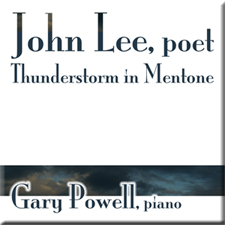
Thunderstorm in Mentone - John Lee, Gary PowellI’m proud to announce the worldwide digital release of “Thunderstorm in Mentone,” a spoken-word album featuring author and speaker, John Lee.

Composers are often called upon to interpret life in solitude. This project, however, was by its nature a collaborative effort. I found that musically interpreting the intimacy of John Lee’s words and voice was a wonderful and enriching creative experience. My intent was not to simply provide a musical bed for John’s rich baritone. Instead, I chose to score the music both tightly and programmatically to his poetry’s honest imagery. My wish is that you will experience this integration of poetry and music as deeply as I have and find the solo piano transparently merged with John Lee’s beautiful performance.

When Gary Powell and I first talked about him setting music to my poems I thought, ‘What a compliment,’ and ‘Sure, let’s try it.’ Then when I heard his first composition I could hardly compose myself. The sound coming out of this talented, gentle man’s soul stirred my own. Now after listening to his music embrace my poems, I want to write more poetry and be a better poet and say, ‘Let’s do more.’ And we will. – John Lee, Poet and Writer

“Thunderstorm in Mentone” – Now Available Online for Worldwide Download from These Stores

iTunes Worlwide button
amazon mp3 buttonrhapsody button


Thunderstorm in Mentone

Written and Read by John Lee
Composed and Piano Performance by Gary Powell
Produced by Gary Powell

 1. The Long Walk Home
 2. Ancient Paths
 3. The Man Who Had Never Seen the Sea
 4. It is a Wonder
 5. The Upward Journey
 6. Thunderstorm in Mentone
 7. Holding On
 8. Lines and Curves
 9. Letters
10. A Fall Wedding
11. Nothing
12. And Thomas Answered
13. Becoming Astonished
14. All Things
15. Bringing Forth

BLOGGING TIP: TO SHARE THIS WITH YOUR FRIENDS: Click the title of this post to display its permalink URL in your browser’s address bar. A permalink is nothing but a permanent URL address for any post. Every post (or blog) has its own permalink. You can now copy and paste this URL address from your browser’s address bar into an email to share with others.


by Gary Powell, Composer/Pianist

Thunderstorm in Mentone - John Lee, Gary PowellI’m proud to announce the worldwide digital release of “Thunderstorm in Mentone,” a spoken-word album featuring author and speaker, John Lee.

Composers are often called upon to interpret life in solitude. This project, however, was by its nature a collaborative effort. I found that musically interpreting the intimacy of John Lee’s words and voice was a wonderful and enriching creative experience. My intent was not to simply provide a musical bed for John’s rich baritone. Instead, I chose to score the music both tightly and programmatically to his poetry’s honest imagery. My wish is that you will experience this integration of poetry and music as deeply as I have and find the solo piano transparently merged with John Lee’s beautiful performance.

When Gary Powell and I first talked about him setting music to my poems I thought, ‘What a compliment,’ and ‘Sure, let’s try it.’ Then when I heard his first composition I could hardly compose myself. The sound coming out of this talented, gentle man’s soul stirred my own. Now after listening to his music embrace my poems, I want to write more poetry and be a better poet and say, ‘Let’s do more.’ And we will. – John Lee, Poet and Writer

“Thunderstorm in Mentone” – Now Available Online for Worldwide Download from These Stores

iTunes Worlwide button
amazon mp3 buttonrhapsody button


Thunderstorm in Mentone

Written and Read by John Lee
Composed and Piano Performance by Gary Powell
Produced by Gary Powell

 1. The Long Walk Home
 2. Ancient Paths
 3. The Man Who Had Never Seen the Sea
 4. It is a Wonder
 5. The Upward Journey
 6. Thunderstorm in Mentone
 7. Holding On
 8. Lines and Curves
 9. Letters
10. A Fall Wedding
11. Nothing
12. And Thomas Answered
13. Becoming Astonished
14. All Things
15. Bringing Forth

BLOGGING TIP: TO SHARE THIS WITH YOUR FRIENDS: Click the title of this post to display its permalink URL in your browser’s address bar. A permalink is nothing but a permanent URL address for any post. Every post (or blog) has its own permalink. You can now copy and paste this URL address from your browser’s address bar into an email to share with others.