by Gary Powell
Okay, nearly everyone has chimed in with a positive response to my suggestion of learning how we can help each other online in a more direct and meaningful way. There is nothing new about this strategy for any of us. Making it spring forth into computer code, that doesn’t just flirt with its self-serving image in the mirror, is the real question.  We can become so focused on our own outreach that these efforts for our friends can eventually be overlooked or forgotten. I would like to see us all support and point our audiences to the people of our choosing. No record company needed. No art galleries needed; no telephone, satellite TV or newspapers needed to tell us who’s who while taking not only their clients’ money but our money too. Do we really need this kind of help in deciding who we really are. Thanks, but no! We’ll take it from here.
I’m assuming social-media guru, Tom Parish is the one of us with the most experience in managing any online presence. He’s the one who actually makes his living teaching people about leveraging social media toward specific goals. That said, I’m proposing that social media is just one of many strategies we should be using. Somewhere between the smokey back-room deals, the two-martini lunches, the Wednesday-night church suppers, the untoward affairs of the politically afflicted, or even just good friends who hold each other in high regard, that this is where real connections and deals are made. FACT: I have NEVER secured a job that I applied for. However, when I was referred by someone or I was found simply by chance and given the opportunity to present myself, I have never NOT been offered the job. (Sorry for the double negative, Emma. I just liked the way it sounded.)
“The other dancers will only look at themselves in the mirror. They’ll never even see us.” – Mitch Pileggi, actor
In year 1980 Mitch Pileggi, X-Files’ Agent Skinner, dragged me to a modern dance class as part of his training to be an actor. I said, “Shit, Mitch, I can’t dance. I’ve never taken a dance class in my life and all those real dancers are going to be starring at us. “You’ve got to be f’n kidding me†he barked, “Gary, shut up. The other dancers only look at themselves in the mirror. They’ll never even see us.†We went. Mitch was right.
“Blog, post video and photos, but quit looking in the mirror long enough to give a little support the people you would like to see win. We can no longer choose to sit idle while we wait for our big break. That paradigm is over. We are our big break.” – Gary Powell
Maybe we should hold a small seminar for ourselves and stir this around and see what happens. I’m not much for clubs, or joining things, or meetings for that matter. But, I don’t want to miss an opportunity for us all to get really smart and effective at helping the people of our own choosing. We have already hired Tom Parish as a moderator for us once before. He’s been so helpful to me in the past and is great at wakening our individual spirit. But we too easily slip back into old patterns.
After blogging now for five years straight, I’ve noticed that there is an obstacle to our successfully joining forces in supporting one another in our artistic or business interests. We’ve all been groomed throughout our lives to believe that talent and product is presented to us only through proper channels like universities, television, newspapers, magazines or movies. Our lizard brains have been too institutionalized to even conceive of promoting and helping the people of our choice. So, most of us go the promotional route alone with the same results as before; wasted time and money. Well, it’s time to wake up and understand that Louis Prima (Big Night) is not coming to dinner and we should have never waited for Godot. Not one minute. Let’s help one another open our lemonade stands. It’s so easy to do now that we have the technology and we all win.
Join me on my Facebook Fan Page.
For further reading: Christine Herron has spent her career finding new applications for infrastructure technologies.
All Content of Gary Powell’s Site is Licensed Under a
Creative Commons Attribution-NonCommercial-NoDerivs 2.5 License

.
by Gary Powell
Okay, nearly everyone has chimed in with a positive response to my suggestion of learning how we can help each other online in a more direct and meaningful way. There is nothing new about this strategy for any of us. Making it spring forth into computer code, that doesn’t just flirt with its self-serving image in the mirror, is the real question. We can become so focused on our own outreach that these efforts for our friends can eventually be overlooked or forgotten. I would like to see us all support and point our audiences to the people of our choosing. No record company needed. No art galleries needed; no telephone, satellite TV or newspapers needed to tell us who’s who while taking not only their clients’ money but our money too. Do we really need this kind of help in deciding who we really are. Thanks, but no! We’ll take it from here.
I’m assuming social-media guru, Tom Parish is the one of us with the most experience in managing any online presence. He’s the one who actually makes his living teaching people about leveraging social media toward specific goals. That said, I’m proposing that social media is just one of many strategies we should be using. Somewhere between the smokey back-room deals, the two-martini lunches, the Wednesday-night church suppers, the untoward affairs of the politically afflicted, or even just good friends who hold each other in high regard, that this is where real connections and deals are made. FACT: I have NEVER secured a job that I applied for. However, when I was referred by someone or I was found simply by chance and given the opportunity to present myself, I have never NOT been offered the job. (Sorry for the double negative, Emma. I just liked the way it sounded.)
“The other dancers will only look at themselves in the mirror. They’ll never even see us.” – Mitch Pileggi, actor
In year 1980 Mitch Pileggi, X-Files’ Agent Skinner, dragged me to a modern dance class as part of his training to be an actor. I said, “Shit, Mitch, I can’t dance. I’ve never taken a dance class in my life and all those real dancers are going to be starring at us. “You’ve got to be f’n kidding me†he barked, “Gary, shut up. The other dancers only look at themselves in the mirror. They’ll never even see us.†We went. Mitch was right.
“Blog, post video and photos, but quit looking in the mirror long enough to give a little support the people you would like to see win. We can no longer choose to sit idle while we wait for our big break. That paradigm is over. We are our big break.” – Gary Powell
Maybe we should hold a small seminar for ourselves and stir this around and see what happens. I’m not much for clubs, or joining things, or meetings for that matter. But, I don’t want to miss an opportunity for us all to get really smart and effective at helping the people of our own choosing. We have already hired Tom Parish as a moderator for us once before. He’s been so helpful to me in the past and is great at wakening our individual spirit. But we too easily slip back into old patterns.
After blogging now for five years straight, I’ve noticed that there is an obstacle to our successfully joining forces in supporting one another in our artistic or business interests. We’ve all been groomed throughout our lives to believe that talent and product is presented to us only through proper channels like universities, television, newspapers, magazines or movies. Our lizard brains have been too institutionalized to even conceive of promoting and helping the people of our choice. So, most of us go the promotional route alone with the same results as before; wasted time and money. Well, it’s time to wake up and understand that Louis Prima (Big Night) is not coming to dinner and we should have never waited for Godot. Not one minute. Let’s help one another open our lemonade stands. It’s so easy to do now that we have the technology and we all win.
Join me on my Facebook Fan Page.
For further reading: Christine Herron has spent her career finding new applications for infrastructure technologies.
All Content of Gary Powell’s Site is Licensed Under a
Creative Commons Attribution-NonCommercial-NoDerivs 2.5 License
.


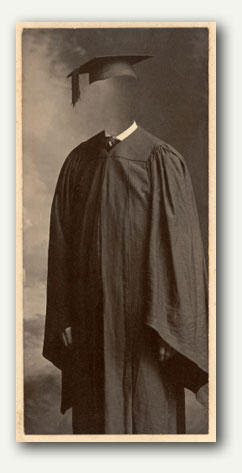 Upon leaving academia, every career path in the music and media businesses immediately becomes unique. Successful individuals have each created their story, unless they came into their professional life as a legacy which is a whole ‘nother topic. Our unique stories is why global advice is so easy to get and so hard to follow; and is advice seldom effective in its practical application. Worse than that is the fact that the eduction we did get can be misleading or even harmful under the stress-test of a real-world artistic career. If you find that your cap and gown has left you disrobed or simply had nothing to do with who you are as an artist or how you earn money as an artist, then read on for the good news.
 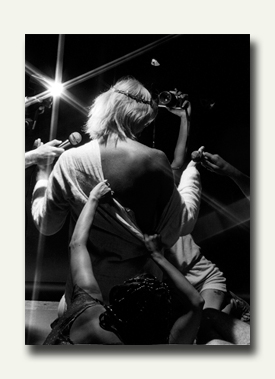 There is a point in the development of your performing career at which your own vision of self must become disordered. This is a time and place where your prevailing reality is challenged. For me it came at age twenty-seven in Los Angeles.
  If you finally get the call for the job or the opportunity you’ve worked for, it might be a good time to realize that healthy business relationships are born of mutual understanding, mutually earned respect, mutual reliability and mutually earned loyalty. Notice the omission of the word trust. These new business relationships are never born from a bilateral adoration of you, the artist. If you really believe it is all about you, then prepare to stand in a very long cue while enjoying a very short career on the latest thrill ride called SEDUCTION. Next, order any one of these books written on the topic of