2007 (A Year in Review)

Gary Powell 2007 Year in Review Photos
by Gary Powell

  • SIXTEEN “Tween” Pop Songs Produced
  • TEN Vocal Jazz Songs Recorded and Mixed
  • ONE Jazz Choir Piece Recorded and Mixed
  • EIGHT “Tween” Pop Song Vocals Produced and Mixed
  • ONE Spanish Song Written and Produced
  • ONE Italian Song Orchestrated and Produced
  • THIRTY-FOUR Movie Cues Composed and Mixed
  • EIGHT Musical Storybook Cues Composed and Mixed
  • ONE Pop Song Written and Produced
  • Four Folk Rock Songs Produced
  • TWO Christmas Songs Produced and Mixed
  • FIFTEEN Poetry Music Cues Scored and Produced
  • ONE Instructional DVD for Classical Guitar
  • FOUR “In the Studio with Gary Powell” Shows Produced
  • SEVEN Personal Appearances as a Speaker or in Facilitator in Vocal Workshops

January

    Recorded ten songs for the Austin Vocal Group “Take 5” Album Project.
    Composed and Produced eight one-minute underscore cues for a European audio release of “Pirates of the Caribbean”.

February

    Presented private “In the Studio with Gary Powell” show featuring Craig Toungate for Wes Bishop’s birthday party.
    Produced eight songs for Disney’s Karaoke Series,“Disney Girlz Rock”.

March

    Delivered a speech to the Austin Downtown Rotary Club on the state of the music business.
    Facilitated a Vocal Workshop for the theatrical singers at DeSales University with Director, Dennis Razze.

April

    Brainstormed in a three day personal workshop with theatrical director, Alan Souza, for my major musical work of “Aristotle’s Prayer”.
    Record two publishing demos for singer/songwriter, Faith Greve.
    Wrote and recorded “Go Go Bananas” for Walt Disney Records’ new release “The Jungle is Jumpin’“.
    Arranged and produced “Baloo”, a previously unreleased song from “The Jungle Book”, for “The Jungle is Jumpin’“.

May

    Produced Rich Harney’s composition, “Jesus Lamb of God”, a Choral Recording.
    Produced Helen Darling’s Publishing Demo for her song “Mistake”.
    Arranged and recorded the string orchestra for the song “Se” from the movie Cinema Paradiso for singer Giovanni Giglini.
    Arranged and produced two more publishing demos for singer/songwriter Faith Greve.

June

    Hosted and produced an “In the Studio” concert, featuring Craig Toungate and Susan Lincoln, in Huntsville, Texas for my father’s 83rd birthday.
    Recorded and produced eight songs for Disney Karaoke Series, “The Cheetah Girls 2″.

July

    Recorded and produced the vocal tracks for “Disney’s Karaoke Series, Hannah Montana”.
    Arranged, recorded and produced “Holly Jolly Christmas”, featuring Craig Toungate.

August

    Rode motorcycles with Larry Seyer to Branson, Missouri for a week of meetings with performers and visits to venues.

September

    Edited and archived audio and video recordings from my studio for singer Joe York’s Memorial Service at Austin’s Zilker Park.
    Finished a year-long project producing the video for classical guitarist Philippe Bertaud, “Philippe Bertaud, On the Music of Hector Villa-Lobos”.

October

    Began creative meetings with Glendalough Studios for their feature film “Guilty“.
    Completed work scoring the poetry of John Lee (began recording in 2005) to be released in the Fall of 2008 under the title, “John Lee, Thunderstorm in Mentone”.

November

    Spent six days in Los Angeles for pre-production, development, thematic and creative meetings with clients.
    Wrote and recorded the theme song, “Obscura la Noche” for placement in Glendalough Studios’ movie “Guilty“.
    Composed and recorded the original score for Glendalough Studios’ movie “Guilty“.

December

    Mixed and delivered the score for the movie “Guilty“.
    Finished and delivered the final mix of “Se” for singer Giovanni Giglini.

PICTURED AT RIGHT FROM THE TOP DOWN:
Gary Powell, Amy Person, Max & Jessie Powell, Vanessa Joy & Amy Person, Giovanni Giglini, Taylor Seyer, Alice Gerhart, Amy Person & Sae Minh & Peter Minh & Gary Powell, Larry Seyer, Dennis Razze, Faith Greve, Ted Kryczko, Paul Baker, Philippe Bertaud, Alison Acton & Helen Darling, Yakov Smirnoff, Take 5, Helen Darling, Gary Powell & Chris McGuiness, Alison Acton, Larry Seyer, David Wise, Susan Lincoln & Craig Toungate, Alicia Jones, Mike Mordecai, Max Powell, Luiz Coutinho, Joel Cowen, Ben Nippis, Lisa Minchich, Rich Harney, Gary Slechta, Mr. Marvin

View Gary Powell's profile on LinkedIn
View Gary Powell’s Profile on LinkedIn

(Please note that I do not represent the Walt Disney Company nor do I sell their recordings.
For more information please go directly to Walt Disney Records
or follow the links within my site for specific titles.)

Gary Powell 2007 Year in Review Photos
by Gary Powell

  • SIXTEEN “Tween” Pop Songs Produced
  • TEN Vocal Jazz Songs Recorded and Mixed
  • ONE Jazz Choir Piece Recorded and Mixed
  • EIGHT “Tween” Pop Song Vocals Produced and Mixed
  • ONE Spanish Song Written and Produced
  • ONE Italian Song Orchestrated and Produced
  • THIRTY-FOUR Movie Cues Composed and Mixed
  • EIGHT Musical Storybook Cues Composed and Mixed
  • ONE Pop Song Written and Produced
  • Four Folk Rock Songs Produced
  • TWO Christmas Songs Produced and Mixed
  • FIFTEEN Poetry Music Cues Scored and Produced
  • ONE Instructional DVD for Classical Guitar
  • FOUR “In the Studio with Gary Powell” Shows Produced
  • SEVEN Personal Appearances as a Speaker or in Facilitator in Vocal Workshops

January

    Recorded ten songs for the Austin Vocal Group “Take 5” Album Project.
    Composed and Produced eight one-minute underscore cues for a European audio release of “Pirates of the Caribbean”.

February

    Presented private “In the Studio with Gary Powell” show featuring Craig Toungate for Wes Bishop’s birthday party.
    Produced eight songs for Disney’s Karaoke Series,“Disney Girlz Rock”.

March

    Delivered a speech to the Austin Downtown Rotary Club on the state of the music business.
    Facilitated a Vocal Workshop for the theatrical singers at DeSales University with Director, Dennis Razze.

April

    Brainstormed in a three day personal workshop with theatrical director, Alan Souza, for my major musical work of “Aristotle’s Prayer”.
    Record two publishing demos for singer/songwriter, Faith Greve.
    Wrote and recorded “Go Go Bananas” for Walt Disney Records’ new release “The Jungle is Jumpin’“.
    Arranged and produced “Baloo”, a previously unreleased song from “The Jungle Book”, for “The Jungle is Jumpin’“.

May

    Produced Rich Harney’s composition, “Jesus Lamb of God”, a Choral Recording.
    Produced Helen Darling’s Publishing Demo for her song “Mistake”.
    Arranged and recorded the string orchestra for the song “Se” from the movie Cinema Paradiso for singer Giovanni Giglini.
    Arranged and produced two more publishing demos for singer/songwriter Faith Greve.

June

    Hosted and produced an “In the Studio” concert, featuring Craig Toungate and Susan Lincoln, in Huntsville, Texas for my father’s 83rd birthday.
    Recorded and produced eight songs for Disney Karaoke Series, “The Cheetah Girls 2″.

July

    Recorded and produced the vocal tracks for “Disney’s Karaoke Series, Hannah Montana”.
    Arranged, recorded and produced “Holly Jolly Christmas”, featuring Craig Toungate.

August

    Rode motorcycles with Larry Seyer to Branson, Missouri for a week of meetings with performers and visits to venues.

September

    Edited and archived audio and video recordings from my studio for singer Joe York’s Memorial Service at Austin’s Zilker Park.
    Finished a year-long project producing the video for classical guitarist Philippe Bertaud, “Philippe Bertaud, On the Music of Hector Villa-Lobos”.

October

    Began creative meetings with Glendalough Studios for their feature film “Guilty“.
    Completed work scoring the poetry of John Lee (began recording in 2005) to be released in the Fall of 2008 under the title, “John Lee, Thunderstorm in Mentone”.

November

    Spent six days in Los Angeles for pre-production, development, thematic and creative meetings with clients.
    Wrote and recorded the theme song, “Obscura la Noche” for placement in Glendalough Studios’ movie “Guilty“.
    Composed and recorded the original score for Glendalough Studios’ movie “Guilty“.

December

    Mixed and delivered the score for the movie “Guilty“.
    Finished and delivered the final mix of “Se” for singer Giovanni Giglini.

PICTURED AT RIGHT FROM THE TOP DOWN:
Gary Powell, Amy Person, Max & Jessie Powell, Vanessa Joy & Amy Person, Giovanni Giglini, Taylor Seyer, Alice Gerhart, Amy Person & Sae Minh & Peter Minh & Gary Powell, Larry Seyer, Dennis Razze, Faith Greve, Ted Kryczko, Paul Baker, Philippe Bertaud, Alison Acton & Helen Darling, Yakov Smirnoff, Take 5, Helen Darling, Gary Powell & Chris McGuiness, Alison Acton, Larry Seyer, David Wise, Susan Lincoln & Craig Toungate, Alicia Jones, Mike Mordecai, Max Powell, Luiz Coutinho, Joel Cowen, Ben Nippis, Lisa Minchich, Rich Harney, Gary Slechta, Mr. Marvin

View Gary Powell's profile on LinkedIn
View Gary Powell’s Profile on LinkedIn

(Please note that I do not represent the Walt Disney Company nor do I sell their recordings.
For more information please go directly to Walt Disney Records
or follow the links within my site for specific titles.)

Investigating the Recording Studio

Session Singer Career Path

by Gary Powell

singer faith greveI have previously written about the job description of the recording session singer, but it was brought to my attention by a subscriber that I had not written a how-to-succeed to-do list for becoming a recording studio session singer on my site. Having already given you the job description, below is a list of just one possible scenario for becoming a professional recording studio session singer.

So, if becoming a recording session singer is a career path you are interested in pursuing, then tomorrow morning start working on this list and answering its questions. Feel free to skip items as scheduling permits and opportunities present themselves.

Nobody REALLY learns to sing until they start recording. – Gary Powell

  • Have a professional vocal coach or producer assess your talent. This assessment can be a broad overview of your vocal and musical capabilities within the context and understanding of where you want to be professionally. They may be wrong, but do it anyway. You must find out if your aptitude and talent match the job description of the recording session singer.
  • Determine what existing singer, if any, you most sound like in terms of tone, texture, phrasing and vocal range. Why do this? This is where your own assessment begins.
  • Determine what style of music your vocal instrument will most likely find work. What’s hip today won’t be tomorrow, but knowing where you most naturally fit or don’t fit stylistically is still important information for you to know about yourself.
  • After determining what musical genre your vocal instrument is particularly well-suited for, heighten and enhance your vocal performance skills within this vocal style! It is here, within the genre which you find most natural and in which you already excel, that you will most likely attract your first customers. Let them discover your true talent later. In the meantime, broaden your vocal stylistic repertoire to include as many genres as possible.
  • Have your tonal memory assessed by a music educator. If required, have that teacher develop adaptive listening skills designed for your own, very unique, instrument. This training will facilitate the most important part of your instrument, being the integration of your voice and ear. This is everyday stuff at any decent music school.
  • At this point, you should have made the realization that your ear is as important as your voice if not more so. If you have not of yet realized this, then repeat from step #1.

  • Start creating a “book” of songs that you can perform when opportunity calls. Your “book” will have all your best-suited repertoire organized with each song written in the right key for your voice. The songs can be simple lead sheets or piano/vocal sheet music, but don’t make the pianist have to interpret or transpose anything. Your “book” will prepare you for any opportunity whether it’s a gig or an audition. If the audition calls for a performance of only sixteen bars, then create the chart that accommodates that restriction as musically as possible. It also means you will never be dependent again on only one pianist for your gigs and you will also be prepared to work with an unknown auditioning or workshop accompanist with no rehearsal at all.
  • Sing. Sing all the time. Learn licks off the radio when you are driving. Anytime you are listening to music, begin singing harmony parts that are not even on the recording. Sing the lead guitar parts. Sing the bass line in whatever octave you can. Listen. Sing. Listen more closely. Sing again. Don’t stop this for the rest of your career. These exercises help to mature the relationship between your ear and your voice.
  • Never sing out of tune again. “Faulty intonation” or “singing out of tune” are the terms used to describe problems with pitch accuracy. In the old days, people used to call this “singing out of key”. Whatever you call it, singing out of tune is the fastest way for dismissal from a recording session unless your family owns the studio.
  • Learn the word timbre and how to pronounce it. (tam’-ber not tim’-ber)
  • Start recording your voice as soon as possible. Record your voice lessons. Record yourself singing karaoke. Sing into a $29 Radio Shack cassette deck or sing directly into your laptop, but start recording and listening to how others hear you. I’ve often said that nobody really learns to sing until they start recording. Start the recording process at whatever level you can afford, then repeat.
  • Now that you have the chops, be brave. Present yourself with confidence wherever you find opportunity, then prove yourself in person. It’s intoxicating to us professionals when your competence and confidence are confirmed in a live audition. We producers are well aware of an important piece of software called Antares Auto-Tune and its ability to correct any singer’s pitch problems. Therefore, we tend to not trust recorded auditions anymore as an accurate measure of a singer’s abilities regarding pitch accuracy.
  • If the singing career does not work out for you, sing anyway. It’s what humans do and it will always enrich your life regardless of where you do it or how much you are paid or not paid. Be human. Sing!
  • Thank you to the newest session singer in my studio, Faith Greve, for her talent, her wonderful attitude and for the use of her photo.

    All Content of Gary Powell’s Site is Licensed Under a
    Creative Commons Attribution-NonCommercial-NoDerivs 2.5 License
    .

    by Gary Powell

    singer faith greveI have previously written about the job description of the recording session singer, but it was brought to my attention by a subscriber that I had not written a how-to-succeed to-do list for becoming a recording studio session singer on my site. Having already given you the job description, below is a list of just one possible scenario for becoming a professional recording studio session singer.

    So, if becoming a recording session singer is a career path you are interested in pursuing, then tomorrow morning start working on this list and answering its questions. Feel free to skip items as scheduling permits and opportunities present themselves.

    Nobody REALLY learns to sing until they start recording. – Gary Powell

  • Have a professional vocal coach or producer assess your talent. This assessment can be a broad overview of your vocal and musical capabilities within the context and understanding of where you want to be professionally. They may be wrong, but do it anyway. You must find out if your aptitude and talent match the job description of the recording session singer.
  • Determine what existing singer, if any, you most sound like in terms of tone, texture, phrasing and vocal range. Why do this? This is where your own assessment begins.
  • Determine what style of music your vocal instrument will most likely find work. What’s hip today won’t be tomorrow, but knowing where you most naturally fit or don’t fit stylistically is still important information for you to know about yourself.
  • After determining what musical genre your vocal instrument is particularly well-suited for, heighten and enhance your vocal performance skills within this vocal style! It is here, within the genre which you find most natural and in which you already excel, that you will most likely attract your first customers. Let them discover your true talent later. In the meantime, broaden your vocal stylistic repertoire to include as many genres as possible.
  • Have your tonal memory assessed by a music educator. If required, have that teacher develop adaptive listening skills designed for your own, very unique, instrument. This training will facilitate the most important part of your instrument, being the integration of your voice and ear. This is everyday stuff at any decent music school.
  • At this point, you should have made the realization that your ear is as important as your voice if not more so. If you have not of yet realized this, then repeat from step #1.

  • Start creating a “book” of songs that you can perform when opportunity calls. Your “book” will have all your best-suited repertoire organized with each song written in the right key for your voice. The songs can be simple lead sheets or piano/vocal sheet music, but don’t make the pianist have to interpret or transpose anything. Your “book” will prepare you for any opportunity whether it’s a gig or an audition. If the audition calls for a performance of only sixteen bars, then create the chart that accommodates that restriction as musically as possible. It also means you will never be dependent again on only one pianist for your gigs and you will also be prepared to work with an unknown auditioning or workshop accompanist with no rehearsal at all.
  • Sing. Sing all the time. Learn licks off the radio when you are driving. Anytime you are listening to music, begin singing harmony parts that are not even on the recording. Sing the lead guitar parts. Sing the bass line in whatever octave you can. Listen. Sing. Listen more closely. Sing again. Don’t stop this for the rest of your career. These exercises help to mature the relationship between your ear and your voice.
  • Never sing out of tune again. “Faulty intonation” or “singing out of tune” are the terms used to describe problems with pitch accuracy. In the old days, people used to call this “singing out of key”. Whatever you call it, singing out of tune is the fastest way for dismissal from a recording session unless your family owns the studio.
  • Learn the word timbre and how to pronounce it. (tam’-ber not tim’-ber)
  • Start recording your voice as soon as possible. Record your voice lessons. Record yourself singing karaoke. Sing into a $29 Radio Shack cassette deck or sing directly into your laptop, but start recording and listening to how others hear you. I’ve often said that nobody really learns to sing until they start recording. Start the recording process at whatever level you can afford, then repeat.
  • Now that you have the chops, be brave. Present yourself with confidence wherever you find opportunity, then prove yourself in person. It’s intoxicating to us professionals when your competence and confidence are confirmed in a live audition. We producers are well aware of an important piece of software called Antares Auto-Tune and its ability to correct any singer’s pitch problems. Therefore, we tend to not trust recorded auditions anymore as an accurate measure of a singer’s abilities regarding pitch accuracy.
  • If the singing career does not work out for you, sing anyway. It’s what humans do and it will always enrich your life regardless of where you do it or how much you are paid or not paid. Be human. Sing!
  • Thank you to the newest session singer in my studio, Faith Greve, for her talent, her wonderful attitude and for the use of her photo.

    All Content of Gary Powell’s Site is Licensed Under a
    Creative Commons Attribution-NonCommercial-NoDerivs 2.5 License
    .

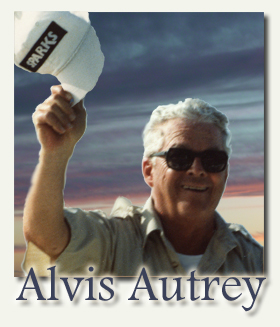
    Alvis Murray Autrey

    In Memoriam (1923-1988)

    Professor Al Autreyby Gary Powell

    No single person has influenced me musically more than Al Autrey. For six years at Sam Houston State University, he was my choir director, my voice teacher, my conducting teacher, my mentor and my friend. I was a pall bearer at his funeral in 1988 and I miss him dearly.

    There is hardly any piece of music I’ve written that does not reflect some portion of what Al Autrey instilled in me as a conductor, composer and person. I can only hope my contribution to the whole of the musical lexicon honors him as my friend and my teacher and in some small way honors all music educators who have touched us in profound ways beyond simply reading eighth notes and quarter rests.

    I will share this one piece of advice from Al Autrey’s incredible musicality.

    AlvisEvery musical event or moment, has both a
    preparation and release. – Alvis Murray Autrey

    Contained in this simple statement, every instant within a composition or performance or even a life becomes purposeful. Thank you, Alvis Murray Autrey, for the gift and depth of your musical understanding.

    Professor Al Autreyby Gary Powell

    No single person has influenced me musically more than Al Autrey. For six years at Sam Houston State University, he was my choir director, my voice teacher, my conducting teacher, my mentor and my friend. I was a pall bearer at his funeral in 1988 and I miss him dearly.

    There is hardly any piece of music I’ve written that does not reflect some portion of what Al Autrey instilled in me as a conductor, composer and person. I can only hope my contribution to the whole of the musical lexicon honors him as my friend and my teacher and in some small way honors all music educators who have touched us in profound ways beyond simply reading eighth notes and quarter rests.

    I will share this one piece of advice from Al Autrey’s incredible musicality.

    AlvisEvery musical event or moment, has both a
    preparation and release. – Alvis Murray Autrey

    Contained in this simple statement, every instant within a composition or performance or even a life becomes purposeful. Thank you, Alvis Murray Autrey, for the gift and depth of your musical understanding.

    Guilty


    (A Gabe Folse Film)

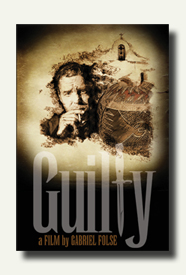
    Guilty Movie Poster
    Just entering the film festival season is Glendalough Studio’s first feature film Guilty.

    As my first entree into the feature film scoring role, I found the process of musically interpreting the work of filmmaker Gabe Folse and his team intriguing. In my experience of scoring dozens of corporate communications videos, I was seldom asked to render emotions musically, even had I found any emotions to render. Gabe Folse’s movie is rich with layers of visual, scripted and acted emotions. Clearly, this is film was born from living the compromises of a closely examined life. This landscape of compromise and redemption is the place where music lives most naturally for me.

    A modern film-noir, GUILTY is the story of a washed-up private investigator Frank Cord, who takes on a high profile murder case that leads him down a path of deception, reflection and a chance at redemption.

    Tonight, December 11th, is Glendalough Studio’s first private screening of the film at Austin Studios. Best of luck to all of the many talented people involved.

    Written, Produced and Directed by Gabriel Folse
    Produced by Greg McCreight
    Music Composed by Gary Powell

    Guilty Movie Poster
    Just entering the film festival season is Glendalough Studio’s first feature film Guilty.

    As my first entree into the feature film scoring role, I found the process of musically interpreting the work of filmmaker Gabe Folse and his team intriguing. In my experience of scoring dozens of corporate communications videos, I was seldom asked to render emotions musically, even had I found any emotions to render. Gabe Folse’s movie is rich with layers of visual, scripted and acted emotions. Clearly, this is film was born from living the compromises of a closely examined life. This landscape of compromise and redemption is the place where music lives most naturally for me.

    A modern film-noir, GUILTY is the story of a washed-up private investigator Frank Cord, who takes on a high profile murder case that leads him down a path of deception, reflection and a chance at redemption.

    Tonight, December 11th, is Glendalough Studio’s first private screening of the film at Austin Studios. Best of luck to all of the many talented people involved.

    Written, Produced and Directed by Gabriel Folse
    Produced by Greg McCreight
    Music Composed by Gary Powell

    Gary Powell on Your Grocer’s Shelves

    “Gary Powell on Your Grocer’s Shelf” 2002 Press Release
    (248 Word Count)

    Gary Powell SongsAs one of the nation’s preimminent composers for children, Gary Powell has reached his ultimate goal. In July, 2002 Kellogg’s released, for public consumption, three million cereal boxes of “Hunny B’s” and three million cereal boxes of “Buzz Blasts”. The “Buzz Blasts” cereal box contains a single CD with two Powell songs which he produced for Kellogg’s, Disney and Pixar. The “Hunny B’s” cereal box contains two more Powell songs which were produced for Kellogg’s and Disney.Powell ‘s musical style suggests a long association with cereal. No one knows exactly what that means, however, with what seems to be the musician’s equivalent to being pictured on a Wheaties box, Powell notes, “I ‘ve always figured I’d have songs placed in Coco Puffs or Captain Crunch, but to jump to the level of Kellogg’s in my lifetime could be nothing more than a dream. My parents always said that ‘cream rises to the top’. Who would have guessed that to be literally true.”Powell says his mission statement as a producer was first inspired when he was a child eating cereal straight from the Kellogg’s box which read, “We provide high quality, great tasting products for you and your family.” With that as his mantra, Powell has since sold over twenty million tasty musical products for familles in forty-three countries.Powell notes, “Most musicians think of Nashville, Los Angeles or New York as recording centers. For me it has always been Battle Creek, Michigan….the home of Kellogg’s”

    Sharing Your Creative Process


    and Why it Helps Your Clients

    by Gary Powell

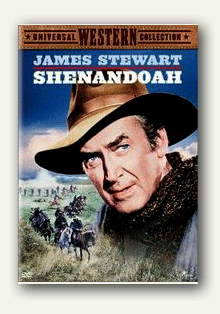
    Shenandoah DVD CoverEither as a film composer or commercial composer, it will help your clients learn to depend on you more if you share your creative process with them. If you don’t, they will most certainly think of your job as just magic or even worse, nothing but talent or luck. If you are composing or writing for sophisticated buyers of creative arts, it is likely they already have experience with talent and especially fame, something that is wearing very thin. I like to think that every note I write is defendable in front of a panel of my peers.

    The most common question I hear is, “where does your inspiration come from?” The opening scene in the great 1965 Civil War movie Shenandoah has actor Jimmy Stewart as the father saying grace over his very large family’s dinner table. Each bow their head in concert as the father speaks in a plain tone, “We thank you Lord for these here vittles. We wouldn’t ah had ’em if we hadn’t ah worked for ’em, but we’d like to thank you anyway. Amen.” Like the good farmer we also have a similar relationship to our art even though our study and labor yield a different fruit.

    Share your process with your clients. It will reassure them and teach them that you can duplicate your high standards on call every time.

    It does not serve us professionally to pretend our creativity is bestowed upon us from nowhere. My inspiration comes from my continuing education, risk, trial and error, rule-breaking adventures, listening, making mistakes and gestation. After all the components of any upcoming creative project are known, time will certainly deliver the answer if we’ve done our part and our labor. Share your process with your clients. It will reassure them and teach them that you can duplicate your high standards on call every time. Each of us garage cognitive and creative processes that are unique and even though we each employ different tools, the music’s effectiveness will always depend on both our discipline and our patience. We wouldn’t have it if we hadn’t worked for it, but I’d like to say “thank you anyway” to Jimmy Stewart and beyond. Amen.

    (TheShenandoah Poster is used here under the Copyright Law of Fair Use for Educational Purposes.)
    All Content of Gary Powell’s Site is Licensed Under a
    Creative Commons Attribution-NonCommercial-NoDerivs 2.5 License
    .

    by Gary Powell

    Shenandoah DVD CoverEither as a film composer or commercial composer, it will help your clients learn to depend on you more if you share your creative process with them. If you don’t, they will most certainly think of your job as just magic or even worse, nothing but talent or luck. If you are composing or writing for sophisticated buyers of creative arts, it is likely they already have experience with talent and especially fame, something that is wearing very thin. I like to think that every note I write is defendable in front of a panel of my peers.

    The most common question I hear is, “where does your inspiration come from?” The opening scene in the great 1965 Civil War movie Shenandoah has actor Jimmy Stewart as the father saying grace over his very large family’s dinner table. Each bow their head in concert as the father speaks in a plain tone, “We thank you Lord for these here vittles. We wouldn’t ah had ’em if we hadn’t ah worked for ’em, but we’d like to thank you anyway. Amen.” Like the good farmer we also have a similar relationship to our art even though our study and labor yield a different fruit.

    Share your process with your clients. It will reassure them and teach them that you can duplicate your high standards on call every time.

    It does not serve us professionally to pretend our creativity is bestowed upon us from nowhere. My inspiration comes from my continuing education, risk, trial and error, rule-breaking adventures, listening, making mistakes and gestation. After all the components of any upcoming creative project are known, time will certainly deliver the answer if we’ve done our part and our labor. Share your process with your clients. It will reassure them and teach them that you can duplicate your high standards on call every time. Each of us garage cognitive and creative processes that are unique and even though we each employ different tools, the music’s effectiveness will always depend on both our discipline and our patience. We wouldn’t have it if we hadn’t worked for it, but I’d like to say “thank you anyway” to Jimmy Stewart and beyond. Amen.

    (TheShenandoah Poster is used here under the Copyright Law of Fair Use for Educational Purposes.)
    All Content of Gary Powell’s Site is Licensed Under a
    Creative Commons Attribution-NonCommercial-NoDerivs 2.5 License
    .